

Knee injuries
Runners, lifters, post-op knees and the ones that just started aching — one therapist, hands on, start to finish.

Knee injuries can sideline everything. No two arrive the same way.
Stiffness
A knee that’s stiff first thing in the morning, after sitting, or on the stairs — and takes a while to get going.
Runner’s knee
An ache around or behind the kneecap that builds with mileage and lingers after.
Swelling
The knee puffs up after a run, a hike or a game, and takes days to settle.
Giving way
Clicking, catching, or a knee that buckles when you plant, pivot or land.
Surgery ahead — or behind you
An ACL, meniscus or knee replacement on the calendar, or rehab that stalled after one.
A scary MRI report
Words like meniscus tear or chondromalacia, and nobody has told you what they actually mean for you.
If one of these is yours, you're in the right place. If your case is different, tell us — we'll say honestly whether we're the right fit.
Find what's driving it. Treat it. Load it so it holds.
An assessment, not a template
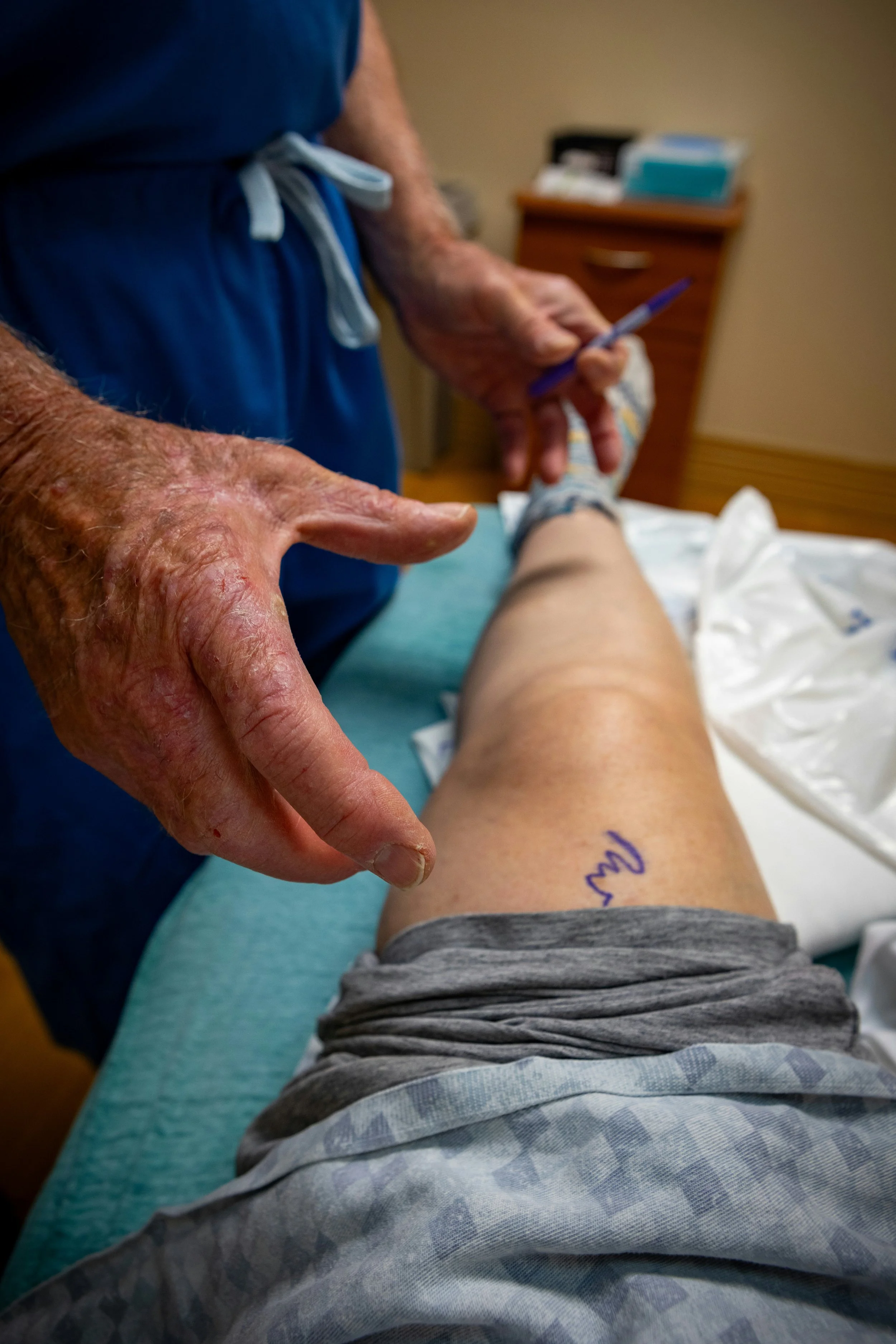
We find what sets your knee off — stairs, squatting, running, landing — and test how your knee, hip and ankle actually move under load. Imaging is context; the exam is the driver.
Treatment that works
Manual therapy to calm the knee and restore how it moves — paired with progressive squatting, stepping and landing work so the change holds under real load.
Education and support
You leave knowing what's driving your knee trouble, what the words on your MRI actually mean, and what to do next — a home program that comes to you, not a photocopied sheet.
We measure where measuring helps. Force plates, dynamometry and gait analysis mean the decision to progress you — or hold you back — comes from a number rather than an impression.
How we measure →The therapists who treat knee injuries.












“After many frustrating years of injuries and working with multiple physical therapists, I finally found Kauno — and now I'm able to walk, run and live my life without constant pain.”
He didn't just treat my injury, he helped me rebuild my confidence and my strength when I honestly thought I'd never get back to normal.
Individual one-on-one support. She listens to my progress and adjusts my plan accordingly.
What each visit will cost you — copay, deductible, out-of-network or self-pay.
A written estimate if you're paying out of pocket — per visit and for the likely course of care.
Whether your HSA, FSA or HRA dollars apply — confirmed before you book.
From the blog



Do I need an MRI or a referral first?
No to both. California is a direct-access state, and the exam — not imaging — drives treatment. If you already have an MRI report, bring it and we’ll tell you what the words actually mean for you.
How many visits does a knee injury take?
Most plans of care run 6 to 12 visits — weekly at first, spaced out as you improve. You’ll have an estimate for your knee at the end of your first visit.
I’m having knee surgery. When should I start?
Your surgeon’s protocol sets the timing — send it to us, or give us the surgeon’s name, and we’ll work from it. If surgery hasn’t happened yet, ask whether coming in beforehand is worth it in your case.