
Benefits of Single-Leg Exercise
Single-leg stability exercises are often overlooked in traditional workout routines. They tend to get pushed aside in favor of heavy squats, deadlifts, leg presses, or hamstring curls. While those movements are valuable, balance and stability—along with strength and endurance—are equally important components of fitness and deserve intentional training.
When programmed correctly, single-leg exercises allow you to train strength, stability, coordination, and balance simultaneously. Rather than making your workout less effective, they add an important dimension to the strength work you’re already doing.
Why Single-Leg Training Matters
One of my favorite single-leg exercises is the clock squat, or a variation of it. This movement involves performing a single-leg squat on one leg while the free leg reaches in different directions—similar to pointing to the numbers on a clock.
Clock squats are effective for several reasons:
Strength development: Single-leg squats strengthen the quadriceps, glutes, and hamstrings.
Multi-planar training: Reaching in different directions challenges the body to produce and control force in multiple planes of motion. Real life and sports rarely occur in straight lines, so training should reflect that.
Dynamic stability and balance: Maintaining balance while moving challenges ankle stability, hip strength, and the endurance of intrinsic foot muscles in a functional way.
Single-leg balance alone is demanding. Adding purposeful movement on top of that better prepares the body for everyday tasks and athletic demands.
How Single-Leg Stability Carries Over to Real Life and Sports
Single-leg stability shows up everywhere:
A soccer player plants on one leg while kicking with the other
A basketball player relies on single-leg control during a layup or jump stop
Running is essentially alternating single-leg stance at speed
Walking up and down stairs requires repeated single-leg balance
Whether you’re an athlete, a runner, or simply navigating daily life, single-leg strength and stability are essential.
How to Progress Single-Leg Exercises
Start simple. Begin with basic single-leg balance and progress gradually as control improves.
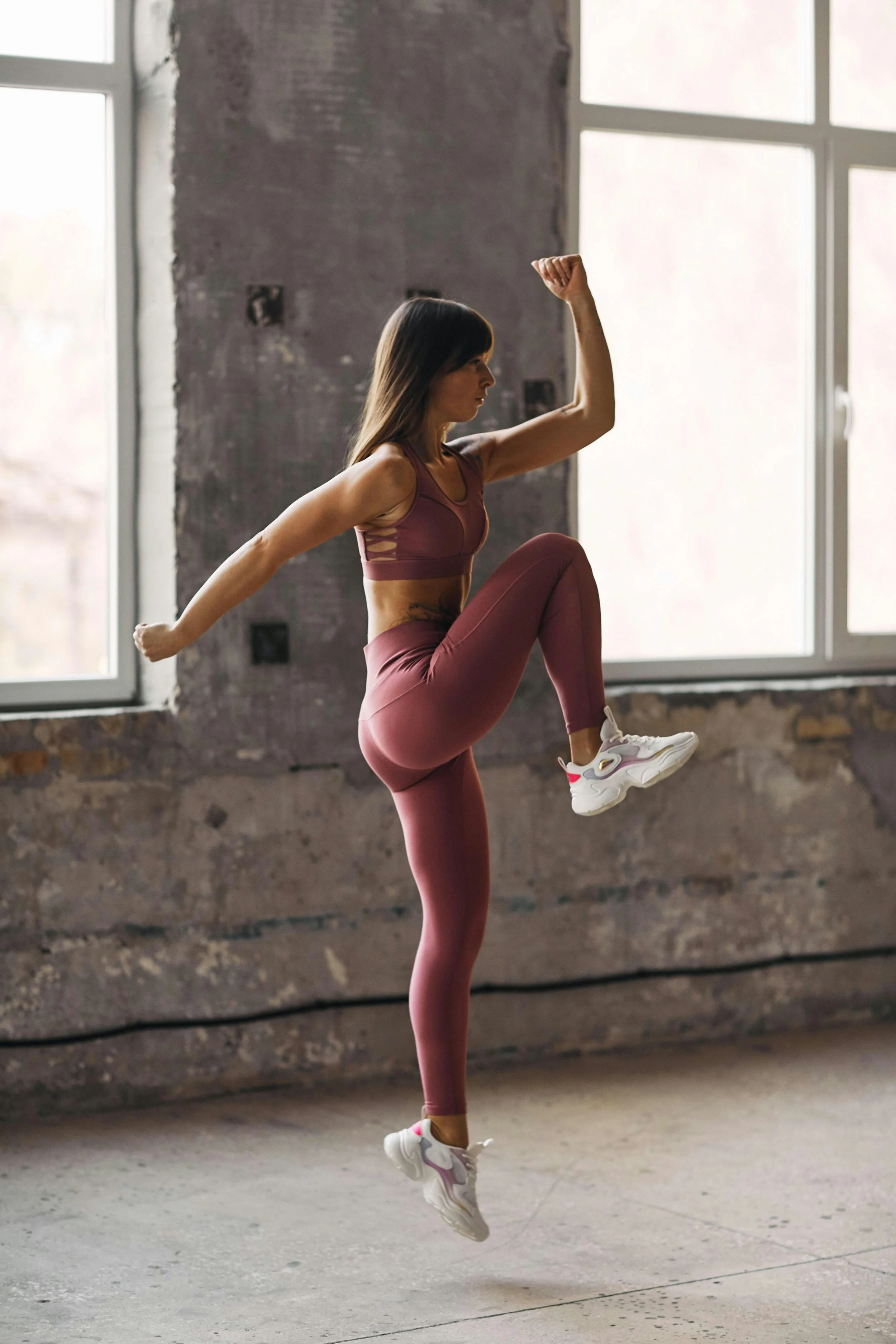
A single leg hop to improve power
Progressions can include:
Standing on uneven or compliant surfaces
Reaching with the arms or free leg
Squatting or hinging on one leg
Adding resistance
Hopping or dynamic transitions
One key cue: keep a slight bend in the knee. This increases muscular engagement and prevents reliance on passive structures like ligaments and joint surfaces. A soft knee promotes better muscle activation and more meaningful stability training.
Strengthening the Glutes With Single-Leg Work
Beyond balance benefits, single-leg exercises are excellent for strengthening the gluteus medius. This muscle plays a major role in:
Stabilizing the pelvis
Supporting single-leg stance
Controlling hip and knee alignment
Single-leg training challenges the glutes in a more functional and comprehensive way than isolated exercises alone. Side steps and band walks have their place—but they’re not the only way to build strong, resilient hips.
The Takeaway
Single-leg exercises improve:
Balance and stability
Lower-body strength
Movement control and coordination
Athletic performance and injury resilience
The next time you’re training, consider adding intentional single-leg work to your routine. Focus on movement quality, control, and gradual progression. These exercises can be surprisingly challenging—but the payoff carries over far beyond the gym.