
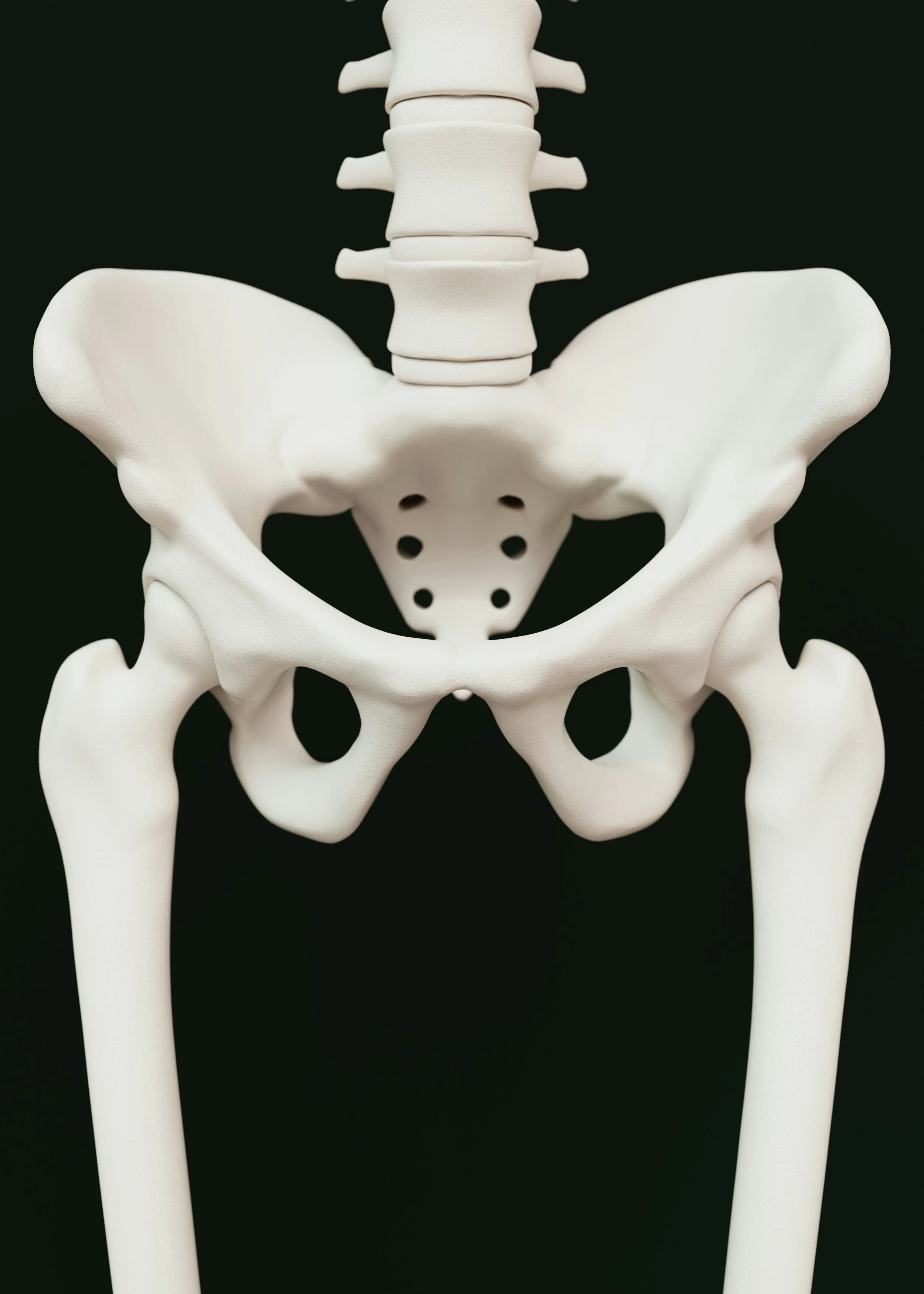
Joints are the connections between bones that allow movement and provide structural support. Without them, our skeleton would be rigid and immobile. There are several types of joints, each designed to allow specific movements and manage different mechanical demands.
1. Synovial joints
Synovial joints are the most common type of joint in the body. They are enclosed in a fluid-filled capsule that reduces friction and allows smooth, pain-free movement. Moving these joints helps stimulate the production of synovial fluid, which supports joint health and mobility.
The bones within a synovial joint are connected by ligaments. There are several subtypes of synovial joints:
- Hinge joints (e.g., elbows and knees): allow flexion (bending) and extension (straightening)
- Ball-and-socket joints (e.g., shoulders and hips): allow multi-directional movement
- Pivot joints (e.g., the neck): allow rotational movement around a single axis
- Saddle joints (e.g., the thumb): allow flexion and extension (back and forth) as well as abduction and adduction (side to side)
- Gliding joints (e.g., wrists and ankles): allow bones to slide past one another
- Condyloid joints (e.g., knuckles and the jaw): allow movement in two planes (biaxial movement), offering more mobility than hinge joints but less than ball-and-socket joints
2. Cartilaginous joints
Cartilaginous joints allow limited movement and are connected by cartilage. These joints include both articular cartilage, which covers the ends of bones, and fibrocartilage, which provides cushioning and shock absorption. There are two main types:
- Synchondrosis joints (e.g., growth plates in long bones): temporary joints present during growth and development
- Symphysis joints (e.g., the pubic symphysis and intervertebral discs): permanent joints that provide stability and limited movement while absorbing forces
3. Fibrous joints
Fibrous joints are fixed or nearly immovable joints in which bones are held together by dense connective tissue. A common example is the sutures of the skull. These joints provide protection and stability, particularly for vital structures such as the brain.
Why joint health matters
Understanding how different joints function can help you better appreciate how your body moves and why joint health is important. Joint pain and dysfunction may result from genetics, autoimmune conditions, aging, or acute and chronic injuries over the lifespan. There are several ways to support and improve joint health.
Exercise
A balanced exercise program that includes strength training, aerobic activity and mobility work is essential for joint health. Exercise helps to:
- Strengthen muscles, tendons and ligaments surrounding the joint, improving stability and reducing stress on joint surfaces
- Increase blood flow, which supports tissue healing and nutrient delivery
- Stimulate synovial fluid production for improved joint lubrication
- Improve mobility and reduce stiffness
- Reduce inflammation by improving circulation, regulating stress hormones such as cortisol, enhancing immune function and reducing body fat
Healthy diet
A nutritious, balanced diet can help reduce inflammation and support overall joint health. Working with a registered dietitian can help you find a dietary approach that fits your lifestyle and individual needs.
Physical therapy
Physical therapists are trained to assess and treat joint conditions while considering other health factors that may affect joint function. Treatment plans often combine manual therapy, targeted exercise and patient education to help reduce pain, restore mobility and improve long-term joint health.
Dealing with joint pain or stiffness? A physical therapist can assess what's going on and build a plan to get you moving comfortably.
book a sessionthe takeaway
Your body has three main types of joints: synovial, cartilaginous and fibrous. Each allows a different amount of movement. Regular exercise, a balanced diet and physical therapy when needed all help keep your joints strong, mobile and healthy.
Frequently asked questions
What are the three main types of joints?
Synovial joints, which are the most common and move freely; cartilaginous joints, which are connected by cartilage and allow limited movement; and fibrous joints, which are fixed or nearly immovable, like the sutures of the skull.
What is synovial fluid?
Synovial joints are enclosed in a fluid-filled capsule that reduces friction and allows smooth movement. Moving the joint helps stimulate the production of synovial fluid, which supports joint health and mobility.
How does exercise help your joints?
Exercise strengthens the muscles, tendons and ligaments around a joint, increases blood flow, stimulates synovial fluid production, improves mobility and reduces stiffness, and can help reduce inflammation.
What causes joint pain?
Joint pain and dysfunction may result from genetics, autoimmune conditions, aging, or acute and chronic injuries over the lifespan.