
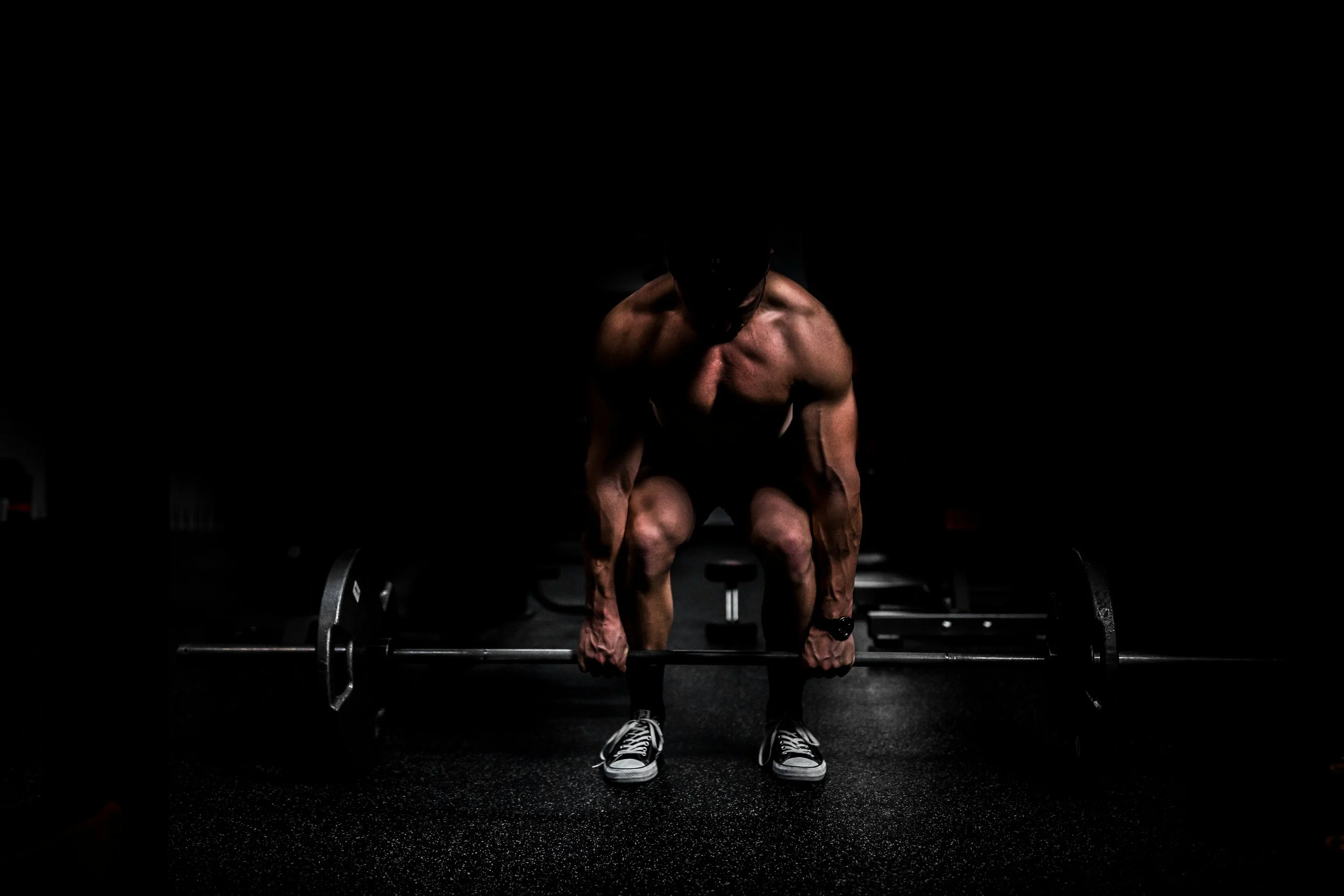
To the untrained eye, the squat and the deadlift can look like the same exercise. Some people even perform them similarly and assume the only difference is where the bar starts. There's nothing inherently wrong with that, but from a training perspective these lifts serve different purposes.
Depending on your goal, each lift emphasizes different muscles, produces force differently and challenges the body in unique ways.
Understanding movement patterns
A movement pattern is a repeatable sequence of anatomical motions shared across people. In strength and conditioning, the most commonly referenced patterns are push, pull, carry, lunge, squat and hip hinge.
The squat represents the squat pattern, while the deadlift falls under the hip hinge. That distinction matters because each pattern emphasizes different joints and muscles: as a general rule, squat patterns emphasize the knees and hip hinge patterns emphasize the hips. That's why the squat and deadlift shouldn't be treated as interchangeable.
Joint torque: knees vs. hips
One of the clearest differences comes from biomechanical research using 3D motion capture to analyze joint movement and torque. Studies consistently show that the squat produces greater torque at the knee than the deadlift, and the deadlift produces greater torque at the hip than the squat. Both exercises load both joints, but each emphasizes one more than the other, which is why the squat is considered knee-dominant and the deadlift hip-dominant.
Muscle activation differences
Unsurprisingly, those torque differences show up in muscle activation. The deadlift activates the glutes to a greater degree, and the squat activates the quadriceps more strongly. Both lifts work both muscle groups, but the difference in quadriceps activation between the lifts is larger than the difference in hip muscle activation. In simpler terms, squats emphasize the quads more than deadlifts emphasize the hips.
How load changes the relationship
Things get more nuanced when you consider relative load, the percentage of your one-rep max (1RM).
Muscle activation and load
At lighter loads, the differences in quadriceps versus hip muscle activation between the two lifts shrink, so at lower intensities both exercises stimulate the muscles more similarly.
Joint torque and load
At heavier loads, the differences become more pronounced:
- In squats, knee torque consistently exceeds hip torque throughout the entire range of motion
- In deadlifts, the torque emphasis changes through the lift: more knee torque early, more hip torque mid-lift, and high torque at both joints at lockout
That changing torque profile is another reason the deadlift is a distinct movement pattern rather than simply a "different squat."
What about fatigue?
It's commonly believed that deadlifts are more fatiguing because people can usually lift heavier absolute loads with them. It makes intuitive sense, but research shows that when matched for repetitions, there's no significant difference in post-exercise strength loss at the hips or knees, and hormonal responses are similar. Neither lift is inherently more fatiguing when programmed appropriately.
So which exercise should you do?
As with most things in rehab and training, it depends:
- For strength development: heavier loads amplify the differences between the lifts, so it's worth training both
- For hypertrophy: lighter loads reduce activation differences, so either exercise can work
- For long-term development: most people benefit from training both movement patterns
Both exercises are valuable; they simply challenge the body differently. If either lift is causing pain, see the top reasons people get injured in the big three lifts.
Want help programming squats and deadlifts for your goals? Our coaches and physical therapists can build a plan around your body.
book a sessionthe takeaway
The squat is a knee-dominant squat pattern that emphasizes the quads; the deadlift is a hip-dominant hinge that works the glutes more. Differences grow at heavier loads and shrink at lighter ones, neither lift is inherently more fatiguing, and most people benefit from training both.
Frequently asked questions
What is the main difference between a squat and a deadlift?
The squat is a squat movement pattern that emphasizes the knees and quadriceps. The deadlift is a hip hinge that emphasizes the hips and glutes.
Do deadlifts work the glutes more than squats?
Yes. The deadlift produces more hip torque and activates the glutes to a greater degree, while the squat activates the quadriceps more strongly.
Are deadlifts more tiring than squats?
Not when matched for repetitions. Research shows no significant difference in post-exercise strength loss at the hips or knees, and similar hormonal responses.
Should I do squats or deadlifts?
Most people benefit from both. For strength, heavier loads amplify their differences, so train both; for hypertrophy at lighter loads, either can be effective.
