
What’s With the Circles? Understanding Cupping Therapy
During the 2016 Rio Olympics, Michael Phelps drew widespread attention after appearing with large, wine-colored circular marks across his shoulders and back. Viewers were left wondering: were those bruises? Since then, cupping therapy has surged in popularity, with athletes across many sports displaying the same distinctive marks. So what exactly is cupping therapy, and why do people use it?
A brief history of cupping
Cupping therapy has been practiced for thousands of years across multiple cultures. The earliest known documentation dates back to 1550 B.C.E. in Egypt. Historically, cupping was explained through different frameworks:
- Eastern medicine used cupping to restore the flow of qi (energy), believed to be disrupted in illness
- Ancient Greek medicine viewed cupping as a way to draw harmful substances or "toxins" to the surface
- Modern Western medicine most commonly uses cupping for its mechanical effects on soft tissue, rather than energy or detoxification theories
Types of cupping therapy
Dry cupping (most common in the U.S.)
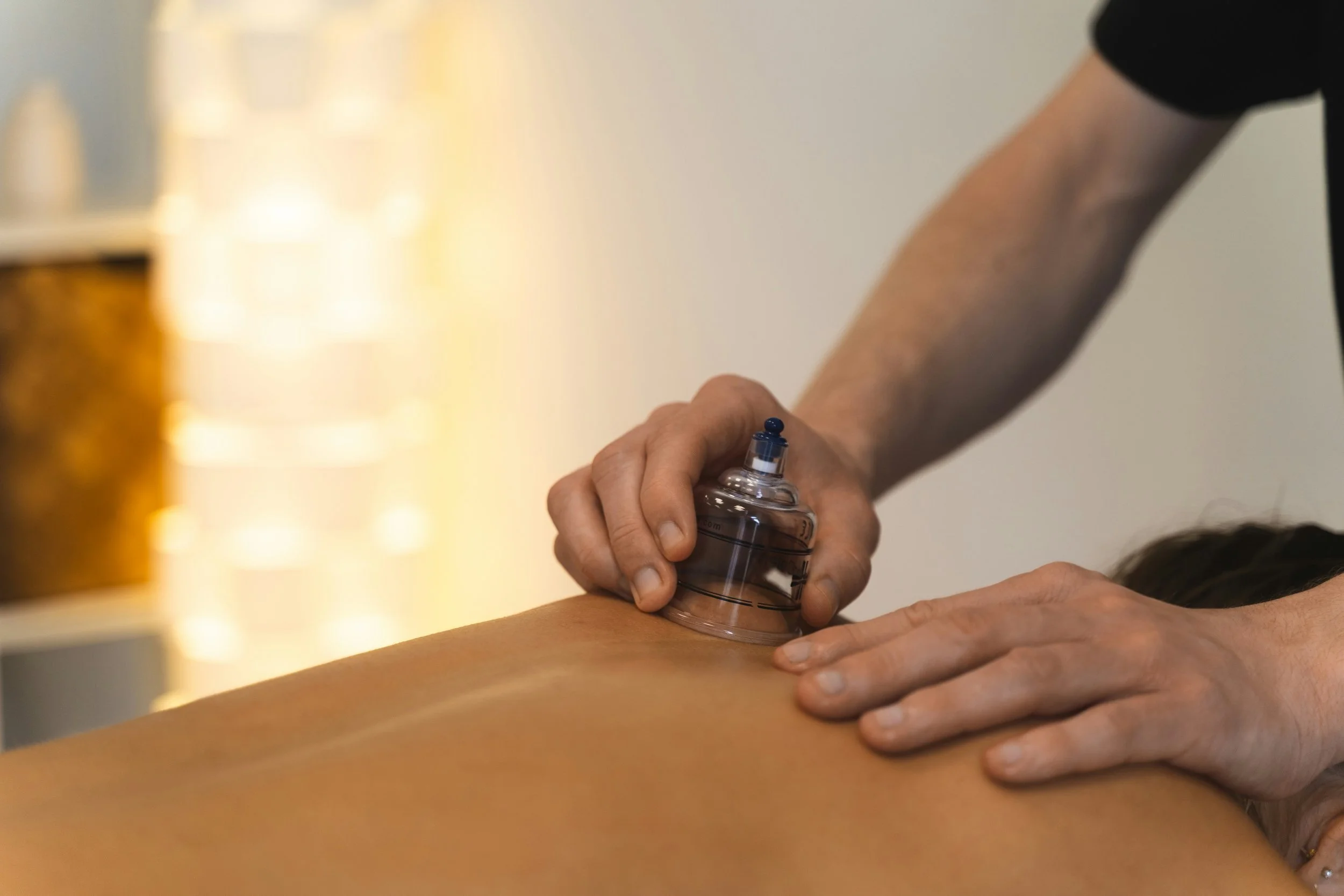
Dry cupping is the most widely used and accepted form of cupping therapy in the United States. It's non-invasive and uses suction, created with heat or a hand pump (with plastic cups), to form negative pressure under the cup. Cups may be left in place or moved across the skin. Once applied, the cup lifts the skin and underlying tissue, creating tension until it's removed.
Wet cupping
Wet cupping is far less common in Western medical settings. It involves suction followed by superficial skin incisions to draw a small amount of blood, and was historically believed to remove toxins. It isn't routinely practiced in modern musculoskeletal care.
How does cupping work?
The exact mechanisms behind cupping aren't fully understood, and current research can't definitively explain how it produces therapeutic effects. Several theories exist:
- Increased local circulation to the treated area
- Neurological effects from mechanical stimulation of the skin and soft tissues
- Altered pain perception through sensory input
- Local inflammatory and lymphatic responses
Many people report relaxation and temporary pain relief after cupping, even if the physiological explanation remains unclear. (For a related myth-buster, see the truth about fascia.)
What does the research say?
Cupping therapy is most often used for musculoskeletal conditions, particularly involving the neck, shoulders and back. A randomized controlled pilot study by Kim et al. (2012) found that cupping was more effective than heat pads for reducing neck pain over a 7-week period. Other studies have shown potential benefits for low back pain and knee osteoarthritis–related pain.
While these findings are encouraging, overall research quality is limited and results vary. Current evidence suggests cupping may be helpful alongside other rehabilitation strategies, rather than as a standalone treatment.
Why do the marks look like bruises?
The circular marks left by cupping aren't bruises from trauma. They're caused by small blood vessels (capillaries) rupturing under suction and blood pooling locally because of the negative pressure. The discoloration typically fades within several days to a couple of weeks and is generally harmless.
Is cupping right for you?
Cupping therapy isn't a cure-all, but it may be a useful add-on for some people, particularly for short-term pain relief or muscle relaxation. If you're curious about cupping, talk with your physician or rehab professional, and use it as part of a broader treatment plan, not a replacement for movement, strengthening or rehab. As with many therapies, individual responses vary.
Those circles you see on athletes? They're not magic, but they're not meaningless either.
Curious whether cupping or other hands-on techniques fit into your recovery? Our physical therapists can build them into a complete plan.
book a sessionthe takeaway
Cupping uses suction to lift the skin and soft tissue, and the circular marks come from ruptured capillaries, not trauma. How it works isn't fully understood, and the evidence is limited, but some studies support short-term pain relief when it's combined with other rehab approaches.
Frequently asked questions
What is cupping therapy?
A treatment that uses suction under a cup to lift the skin and underlying tissue. Dry cupping, the most common form in the U.S., is non-invasive and uses heat or a hand pump to create the suction.
Why does cupping leave marks?
The suction ruptures small capillaries and causes blood to pool locally. The marks aren't bruises from trauma and usually fade within several days to a couple of weeks.
Does cupping actually work?
Some studies show benefits, such as a pilot trial finding cupping more effective than heat pads for neck pain over 7 weeks, but overall research quality is limited. It seems most helpful alongside other rehab strategies.
What is the difference between dry and wet cupping?
Dry cupping uses suction only. Wet cupping adds superficial skin incisions to draw a small amount of blood and isn't routinely practiced in modern musculoskeletal care.
References
Kim TH, Kang JW, Kim KH, et al. Cupping for treating neck pain in video display terminal (VDT) users: a randomized controlled pilot trial. J Occup Health. 2012;54(6):416-426. doi:10.1539/joh.12-0133-oa