
What Is Turf Toe? A Small Injury With a Big Impact
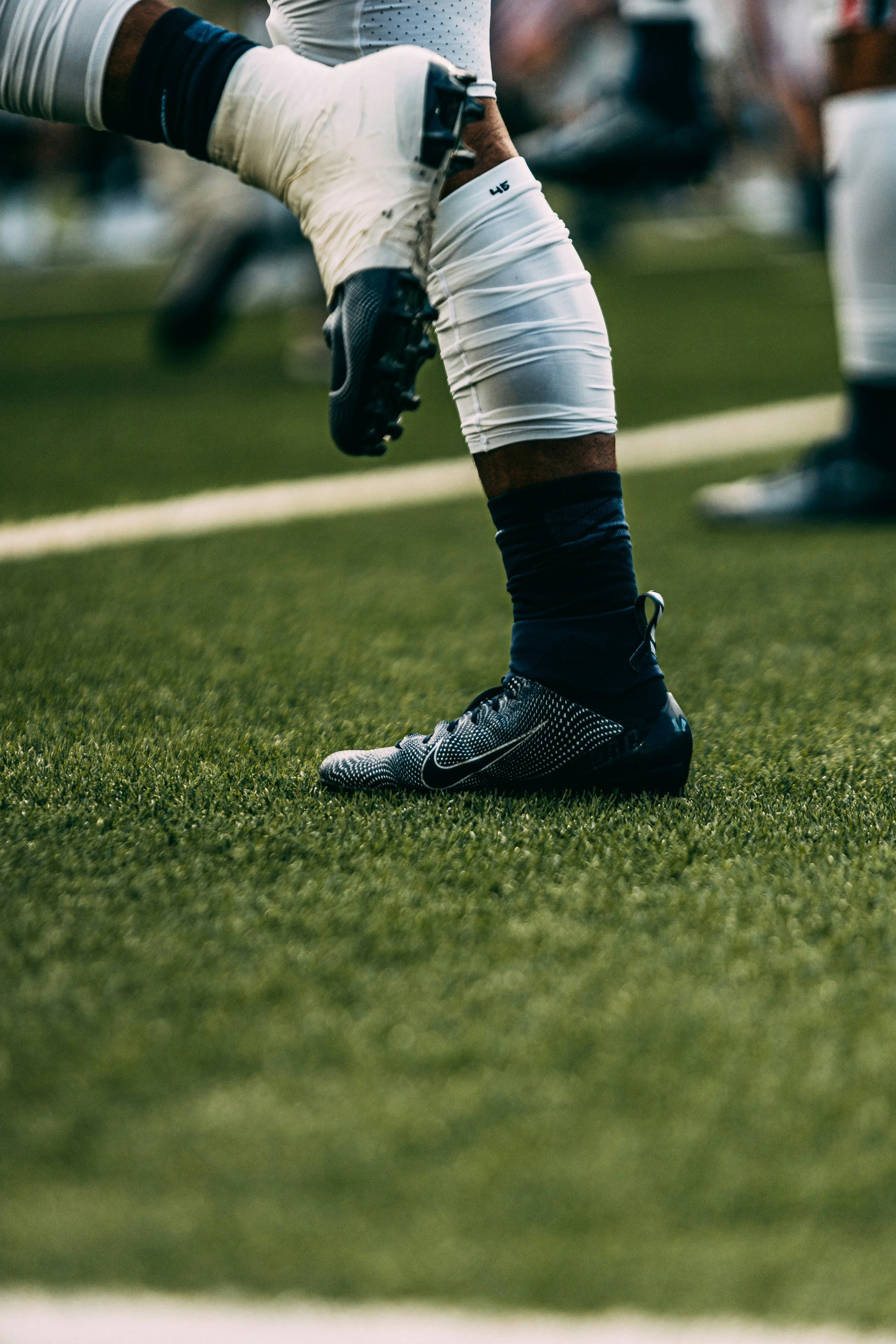
When you hear that NFL players like Brock Purdy or Joe Burrow are sidelined because of a toe injury, it's easy to wonder how something so small can cause such a big problem. The answer lies in a condition known as turf toe, a deceptively minor-sounding injury that can significantly impact performance.
What exactly is turf toe?
Turf toe is a sprain of the plantar capsule ligament, also called the plantar plate, at the first metatarsophalangeal (MTP) joint: the joint where the big toe meets the foot.
This ligament sits on the underside of the joint and plays a critical role in:
- Stabilizing the big toe
- Preventing excessive backward bending (hyperextension)
- Allowing efficient push-off during walking, running and sprinting
When this structure is injured, even basic movements can become painful and unstable.
How severe is it? The grading system
Like most ligament injuries, turf toe is classified into three grades based on severity:
- Grade I: mild stretching or minimal tearing of the ligament
- Grade II: partial tear with moderate pain, swelling and limited motion
- Grade III: complete tear resulting in significant pain, swelling and instability
A Grade I injury may resolve with rest and conservative care in days to weeks. A Grade III injury, however, can be debilitating and may require prolonged immobilization, or even surgery, as seen in Joe Burrow's case.
How does turf toe happen?
Turf toe most commonly occurs due to forced hyperextension of the big toe, meaning the toe bends too far backward. This mechanism often happens when:
- An athlete forcefully pushes off the ground
- The foot is planted while the body moves forward
- The playing surface is hard or less forgiving, such as artificial turf
Every sprint, cut or tackle requires strong toe push-off. For elite athletes, repeated loading of the big toe can either cause turf toe outright or worsen a mild injury over time.
Why turf toe matters
For football players, especially quarterbacks, running backs and linemen, the big toe is essential for:
- Explosiveness
- Balance and stability
- Generating leverage against the ground
Although it may sound minor, turf toe can:
- Limit acceleration and cutting ability
- Alter movement mechanics
- Linger without proper rest and rehab
- Increase the risk of chronic joint stiffness or arthritis
In short, turf toe can be game-changing for your athletic performance if it isn't managed appropriately.
The bottom line
Turf toe may not sound dramatic, but for high-level athletes it's a serious injury that can significantly affect performance. The good news is that with early diagnosis, appropriate rest and structured physical therapy rehabilitation, most athletes recover fully and return to sport without long-term issues. Ignoring it, or returning too soon, can turn a small injury into a lingering problem.
Dealing with a nagging big toe injury? Our physical therapists can assess it and build a plan that gets you back to full speed.
book a sessionthe takeaway
Turf toe is a sprain of the plantar plate under the big toe joint, usually caused by forced hyperextension during push-off. Mild cases can settle in days to weeks, while complete tears may need immobilization or surgery. Early diagnosis, rest and structured rehab help most athletes recover fully.
Frequently asked questions
What is turf toe?
Turf toe is a sprain of the plantar capsule ligament (plantar plate) at the first metatarsophalangeal (MTP) joint, where the big toe meets the foot. The ligament stabilizes the toe and stops it from bending too far backward.
What causes turf toe?
It most commonly results from forced hyperextension of the big toe, often when an athlete pushes off forcefully, plants the foot while the body moves forward, or plays on a hard, less forgiving surface such as artificial turf.
How is turf toe graded?
Grade I is mild stretching or minimal tearing, Grade II is a partial tear with moderate pain, swelling and limited motion, and Grade III is a complete tear with significant pain, swelling and instability.
How long does turf toe take to heal?
A Grade I injury may resolve with rest and conservative care in days to weeks. A Grade III injury can require prolonged immobilization or even surgery. With early diagnosis, rest and structured rehab, most athletes recover fully.