
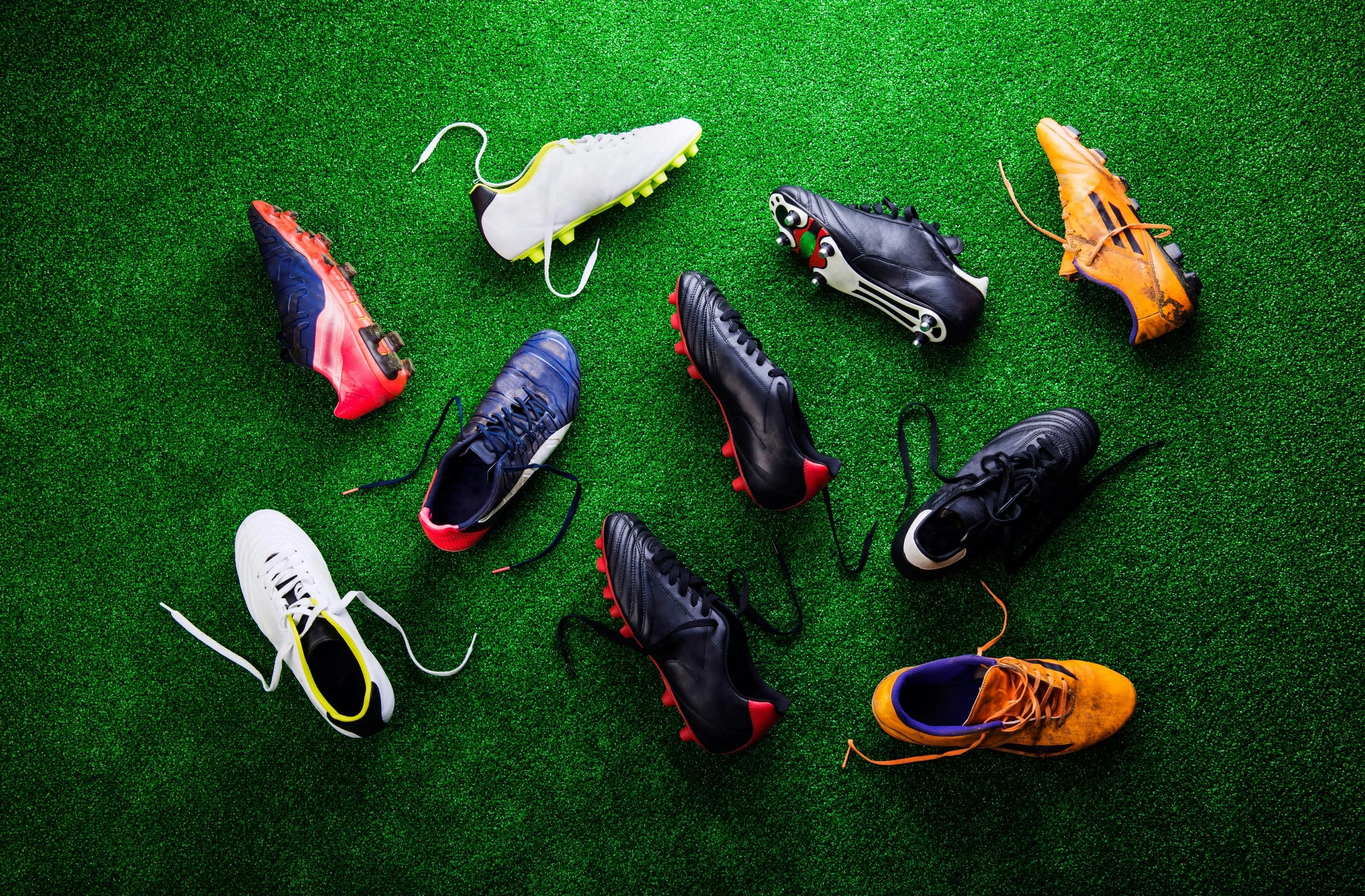
If you play soccer, football, lacrosse or any other field sport, your footwear matters more than you might think. While cleats may look similar at first glance, the shape, length, number and placement of studs can significantly influence both performance and injury risk. So how do you know which cleats to wear, and why does it matter?
Turf vs. grass: the injury debate
In recent years, researchers have taken a closer look at how playing surfaces influence injury rates. While the research is still evolving, several consistent trends have emerged.
Injury rates are higher on turf
A study analyzing the 2021–2022 NFL seasons found that lower-body injuries, especially season-ending injuries requiring surgery, were significantly more common on turf than on natural grass.
Foot and ankle injuries stand out
A 2023 systematic review found that soccer players sustained more foot and ankle injuries on turf than on grass.
The bottom line: while turf fields are cheaper and easier to maintain, natural grass consistently appears to be the safer playing surface for athletes.
Understanding field types
Not all "grass" fields are the same:
- Turf: short, dense, carpet-like artificial surface; harder, flatter and less forgiving
- Artificial grass (AG): longer synthetic blades with rubber pellet infill to soften impact
- Natural grass: a softer surface of real grass and soil that deforms and releases under pressure
Many modern fields blend turf and artificial grass characteristics, which can make choosing footwear more confusing.
Types of cleats and injury risk
Just as fields differ, so do cleats. The interaction between stud design and playing surface determines how much your foot grips, or gets stuck, during cutting, pivoting and sprinting.
| Cleat type | Studs | Best for | Why | Injury risk |
|---|---|---|---|---|
| Turf (TF) | Shortest, most numerous | Turf | Grip without "locking in," reducing rotational torque | Lowest on turf |
| Artificial grass (AG) | Moderate length, more numerous than FG | Artificial grass | Balanced grip and release | Lowest on AG |
| Firm ground (FG) | Longest, fewest | Natural grass | Grass and soil deform and release naturally | Lowest on grass, highest on turf |
How to choose
- Natural grass is the safest surface. Injury rates are consistently lower than on turf.
- If you play on turf, wear turf cleats. They reduce the chance of your foot getting stuck and twisting your ankle or knee.
- Match your cleats to the field. Using the wrong cleat type, especially FG cleats on turf, can significantly increase injury risk.
- Footwear is one variable you can control. Even if the field isn't your choice, your cleats are.
Cleats aren't just about performance; they're about protection. Choosing the right cleats for your surface is one of the simplest ways to reduce lower-body injury risk and stay in the game longer. If you do roll an ankle, here's what to do after an ankle sprain.
Unsure which cleats suit your sport, or dealing with recurring foot, ankle or knee issues? Our physical therapists can guide you based on how you move.
book a sessionthe takeaway
Research shows more lower-body injuries on turf than natural grass. Match your cleats to the surface: short-studded turf cleats on turf, AG cleats on artificial grass and firm-ground cleats on natural grass. Wearing FG cleats on turf is the riskiest combination.
Frequently asked questions
Is turf more dangerous than grass?
Research suggests so. A study of the 2021–2022 NFL seasons found lower-body injuries were significantly more common on turf, and a 2023 systematic review found more foot and ankle injuries on turf among soccer players.
Can I wear firm ground cleats on turf?
It isn't recommended. FG cleats have the longest studs, and on turf they're associated with the highest injury risk because the foot is more likely to get stuck and twist.
What is the difference between turf and artificial grass?
Turf is a short, dense, carpet-like surface that's harder and less forgiving. Artificial grass has longer synthetic blades with rubber pellet infill to soften impact.
What cleats should I wear on artificial grass?
AG cleats, which have moderate-length studs and more of them than FG cleats, offering a balance of grip and release on artificial grass.