
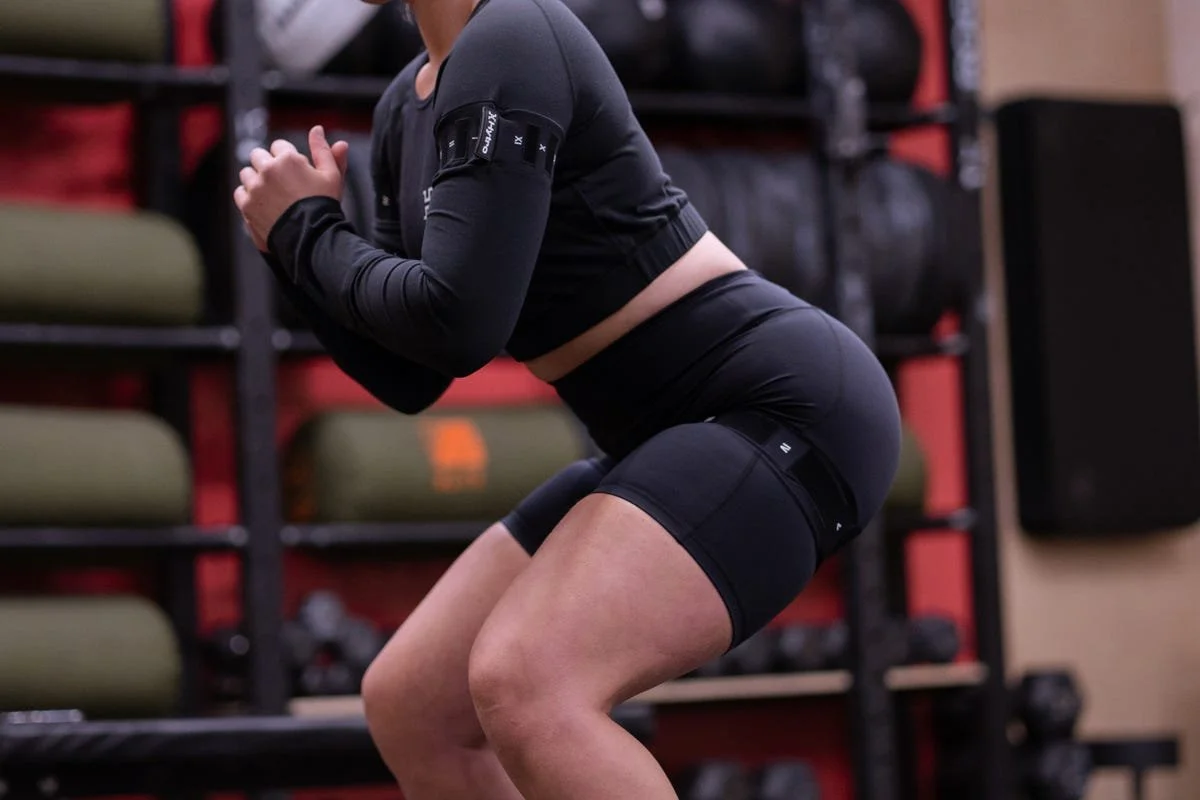
Blood flow restriction (BFR) training uses pressurized cuffs or elastic wraps to partially restrict blood flow to the limbs during exercise. The goal: build strength and muscle with much lighter loads than traditional resistance training. Here's how it works, how it's done, who it helps, and who should be cautious.
What is blood flow restriction training?
BFR has exploded in popularity across the health, fitness, and rehabilitation industries over the last few years, and for good reason. The current research is promising, especially for people who can't tolerate heavy lifting.
How BFR training works
BFR limits venous blood flow out of the working muscles while still allowing arterial blood into the limb. That creates a metabolic environment believed to trigger:
- Increased growth hormone release
- Improved muscle protein synthesis
- Reduced muscle protein breakdown
Together, these effects contribute to muscle growth and strength gains, even when training with low loads. The exact mechanism isn't fully confirmed, but the physiological response appears similar to high-intensity strength training, without the need for heavy resistance.
BFR vs. traditional strength training
| Approach | Load | Typical prescription |
|---|---|---|
| Traditional training for muscle growth | 65% or more of your 1-rep max | 6–12 reps, multiple sets of high-intensity work |
| BFR training | 20–50% of your max effort | 3–5 sets of 15–30 reps, 30–60 seconds of rest |
That makes BFR especially useful for:
- Post-operative patients
- People with painful or inflamed tissues
- Athletes recovering from injury
- Anyone who can't tolerate heavy loads
How BFR training is performed
In most clinical and performance settings:
- Cuffs are placed on the upper arms or upper thighs.
- Pressures typically range from 50 to 200 mmHg, depending on the system and the individual.
- Exercises are performed for 3 to 5 sets of 15 to 30 repetitions.
- Rest periods are typically 30 seconds to 1 minute.
Despite the lighter loads, the metabolic stress is high, which means significant muscle adaptation can occur.
BFR at Kauno
Kauno added the Smart Tools Blood Flow Restriction system to our practice. BFR has strong potential to benefit a wide range of patients, including:
- Post-surgical rehab
- Chronic pain patients
- People with acute or inflamed tissues
- Anyone rebuilding strength after injury
By incorporating BFR, our physical therapists can help patients make meaningful strength gains safely and efficiently, even when heavy loading isn't possible.
Is BFR training safe?
BFR is considered safe for most people when it's performed with proper equipment and supervision, but it may not be appropriate for everyone. Conditions that may require caution include:
- Cardiovascular disease
- Uncontrolled hypertension
- History of blood clots
- Vascular disorders
Always consult a medical professional before beginning BFR training.
Rebuilding strength after surgery or injury? Ask our physical therapists whether BFR training is a good fit for you.
book a sessionthe takeaway
BFR training can build strength and muscle at just 20–50% of your max effort, which makes it a strong option when heavy lifting isn't possible. Use it with proper equipment and supervision.
Frequently asked questions
What is blood flow restriction training?
It's a technique that uses pressurized cuffs or elastic wraps to partially restrict blood flow to the limbs during exercise, so you can build strength and muscle with much lighter loads than traditional resistance training.
How heavy do you lift with BFR?
BFR training has shown strength and hypertrophy gains at just 20–50% of your max effort, compared with 65% or more of your 1-rep max in traditional training for muscle growth.
Who is BFR training good for?
It's especially useful for post-operative patients, people with painful or inflamed tissues, athletes recovering from injury, and anyone who can't tolerate heavy loads.
Is BFR training safe?
It's considered safe for most people with proper equipment and supervision. People with cardiovascular disease, uncontrolled hypertension, a history of blood clots, or vascular disorders may need caution. Always consult a medical professional first.
What does a BFR session look like?
Cuffs go on the upper arms or upper thighs at pressures typically between 50 and 200 mmHg. Exercises are done for 3 to 5 sets of 15 to 30 reps, with 30 seconds to 1 minute of rest.
References
Pope, Zachary K., et al. "Exercise and Blood Flow Restriction." Journal of Strength and Conditioning Research, vol. 27, no. 10, 2013, pp. 2914–2926. doi:10.1519/jsc.0b013e3182874721.
