
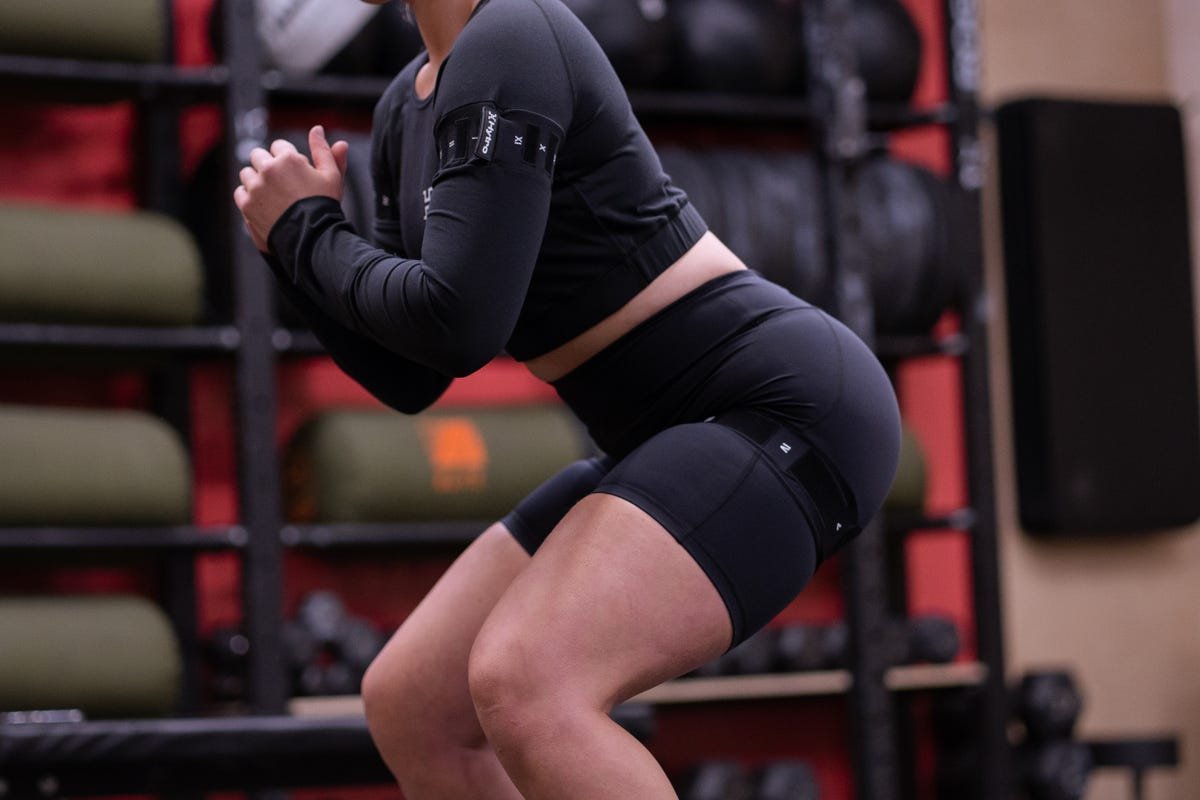
You may have seen people at the gym or on social media wearing what look like cuffs or tourniquets around their arms or legs, making simple exercises look unusually tough. That's blood flow restriction (BFR) training, one of the most innovative tools in strength training and rehabilitation. Here's what it is, how it works and who can benefit.
What is BFR training?
Blood flow restriction training involves placing specialized cuffs or inflatable pressure bands around the upper arms or thighs to partially restrict blood flow during exercise. The goal is to:
- Reduce venous return (blood leaving the limb)
- Allow partial arterial flow (blood entering the limb)
This creates a unique environment that stimulates muscle hypertrophy (growth), even with very light weights or no weight at all. The pressure is individualized based on:
- Limb circumference
- Blood pressure
- Your specific training goals
When performed correctly and supervised by trained professionals, research shows BFR to be safe, effective and clinically valuable.
Why use blood flow restriction training?
BFR lets you gain strength and muscle without lifting heavy loads. That makes it particularly useful for:
- Post-surgical rehabilitation. Patients recovering from ACL surgery, rotator cuff repairs or joint replacements often can't safely handle heavy resistance.
- Injury recovery. BFR stimulates muscle growth while minimizing joint stress.
- Deload or recovery weeks. Athletes can maintain or build muscle with lighter loads.
- Bridging the gap between rest and full training. When high-load training isn't possible, BFR mimics its effects at 20–30% of normal training loads.
That means greater strength gains with significantly less resistance, a game changer for rehab, early loading and joint-friendly training.
How does BFR work?
BFR creates a metabolic and mechanical environment similar to high-load training. Here's what happens inside the muscle:
- Venous occlusion. Blood becomes "trapped" in the working muscle, creating cellular swelling.
- Reduced oxygen availability. A limited oxygen supply forces muscles to work harder at lower loads.
- Increased metabolic stress. This boosts hormones, metabolites and cellular signals that drive muscle growth.
- Fast-twitch fiber activation. Fast-twitch muscle fibers, typically recruited only during heavy lifting, activate under BFR even with low loads.
Together, these effects stimulate muscle growth and strength improvements comparable to lifting heavy, without the strain.
Is BFR right for you?
BFR is safe for most people when performed under professional supervision, but it's not a one-size-fits-all tool. It may be a good fit if you are:
- Recovering from surgery
- Managing joint pain or arthritis
- Returning from injury
- Looking to build muscle with minimal load
- Unable to lift heavy due to pain or restrictions
Always consult a professional
A licensed physical therapist or certified trainer trained in BFR should determine:
- Proper cuff placement
- Appropriate pressure
- Safe exercise selection
- How it fits into your training or rehab plan
BFR is not a replacement for traditional strength training but a powerful supplement, especially when heavy loading isn't appropriate.
Final thoughts
BFR training combines science and innovation to help people build strength, recover from injury and return to full function sooner. Used correctly, it's an effective, joint-friendly way to stimulate muscle growth without heavy weights. If you're curious about adding BFR to your rehab or training, talk to your physical therapist or strength professional to see if it's right for you. For more background, see our earlier post on what BFR training is and why it works.
Wondering if BFR fits your rehab or training? Ask us at your next visit.
book a sessionthe takeaway
BFR uses cuffs to partially restrict blood flow so you can build muscle and strength with light loads. It's especially useful after surgery or injury, but it should be set up and supervised by a trained professional.
Frequently asked questions
What is blood flow restriction training?
It involves placing specialized cuffs or inflatable pressure bands around the upper arms or thighs to partially restrict blood flow during exercise, which stimulates muscle growth even with very light weights or no weight at all.
Is BFR training safe?
When performed correctly and supervised by trained professionals, research shows BFR to be safe, effective and clinically valuable. It's safe for most people under professional supervision, but it's not a one-size-fits-all tool.
Who can benefit from BFR?
People recovering from surgery or injury, managing joint pain or arthritis, looking to build muscle with minimal load, or unable to lift heavy due to pain or restrictions.
How light are the loads used with BFR?
When high-load training isn't possible, BFR mimics its effects at 20–30% of normal training loads.
References
DePhillipo NN, Kennedy MI, Aman ZS, Bernhardson AS, O'Brien L, LaPrade RF. Blood flow restriction therapy after knee surgery: indications, safety considerations, and postoperative protocol. Arthrosc Tech. 2018;7(10):e1037-e1043. doi:10.1016/j.eats.2018.06.010
Cognetti DJ, Sheean AJ, Owens JG. Blood flow restriction therapy and its use for rehabilitation and return to sport: physiology, application, and guidelines for implementation. Arthrosc Sports Med Rehabil. 2022;4(1):e71-e76. doi:10.1016/j.asmr.2021.09.025